
“System Personas”: Bringing Human Stories into System Mapping
A System Map can be one of the most helpful ways to work with complexity. It gives us a comprehensive view of a system and helps us understand — and communicate — the dynamics that shape what we see on the surface.
But there’s a challenge.
For someone who sees a System Map for the first time, it can feel overwhelming. So many variables. So many connections. And those feedback loops can look like a foreign language. Where do you even start? Take the map below, which we developed in a project on the wellbeing of young people in Cluj. Could you immediately spot the key dynamics — without someone guiding you through it?
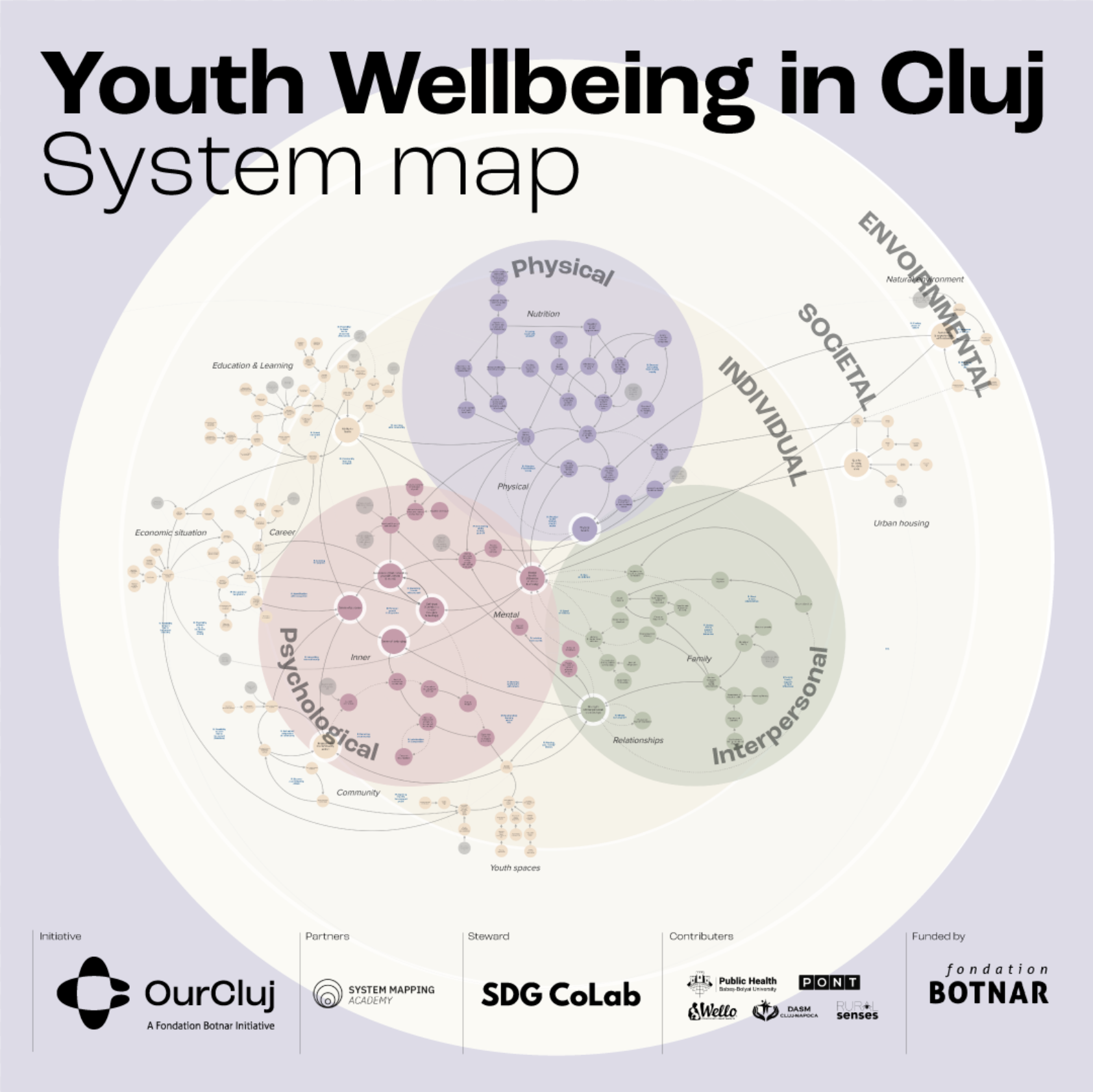
It’s one reason we tend to think in silos: staying within familiar boundaries feels safer and simpler. In systems research, this is often described as bounded rationality — we make “rational” decisions, but only based on the limited information we can process. As a result, we focus on a bounded part of the system, and our objectives tend to become narrower than the situation actually requires.
Ideally, the modeller — or an experienced facilitator — walks others through the map. This can provide a quick overview of the interconnected sectors, tell the story of the problem, explain the underlying dynamics, and point to potential leverage points. But that kind of guided introduction is not always possible. Often, we want to share a map to raise broader awareness for an issue and help various people to see how they are connected to the bigger picture.
That’s where System Personas come in. They help stakeholders enter a System Map faster — without losing the systemic logic behind it.
What are System Personas?
System Personas are human-centred entry points into a System Map. They represent key actor groups within the system and are grounded in qualitative research (e.g., interviews, workshops, observations, literature).
Unlike classic personas that focus on “user needs” in a product context, System Personas connect a lived experience to systemic dynamics. They make the map easier to understand because they:
give people a relatable starting point,
translate abstract variables into everyday realities,
and help highlight the dynamics that matter — without needing to show the full map at once.
A persona becomes a guide: “Let’s follow this person through the system.”
Case Study: Youth Wellbeing in Cluj-Napoca
In 2024, we collaborated with the OurCluj Initiative to explore an important question for the future of urban life: What drives the wellbeing of young people?
OurCluj is a design and research initiative by urban innovators in Cluj-Napoca, Romania. Their aim is to put wellbeing at the centre of urban development — rather than focusing primarily on economic growth. The initiative pays particular attention to young people, because they are the ones who will shape the future of the city.
Our goal was to map the complex dependencies between the challenges and resources of young people in an urban environment — and to create a shared understanding among local stakeholders and experts who rarely get the chance to look at the whole picture.
How we built the System Map
We developed the System Map through a participatory process with more than 40 local stakeholders, supported by:
literature research
expert and stakeholder interviews to identify variables and dynamics,
and workshops to develop, validate, and analyse the map together.
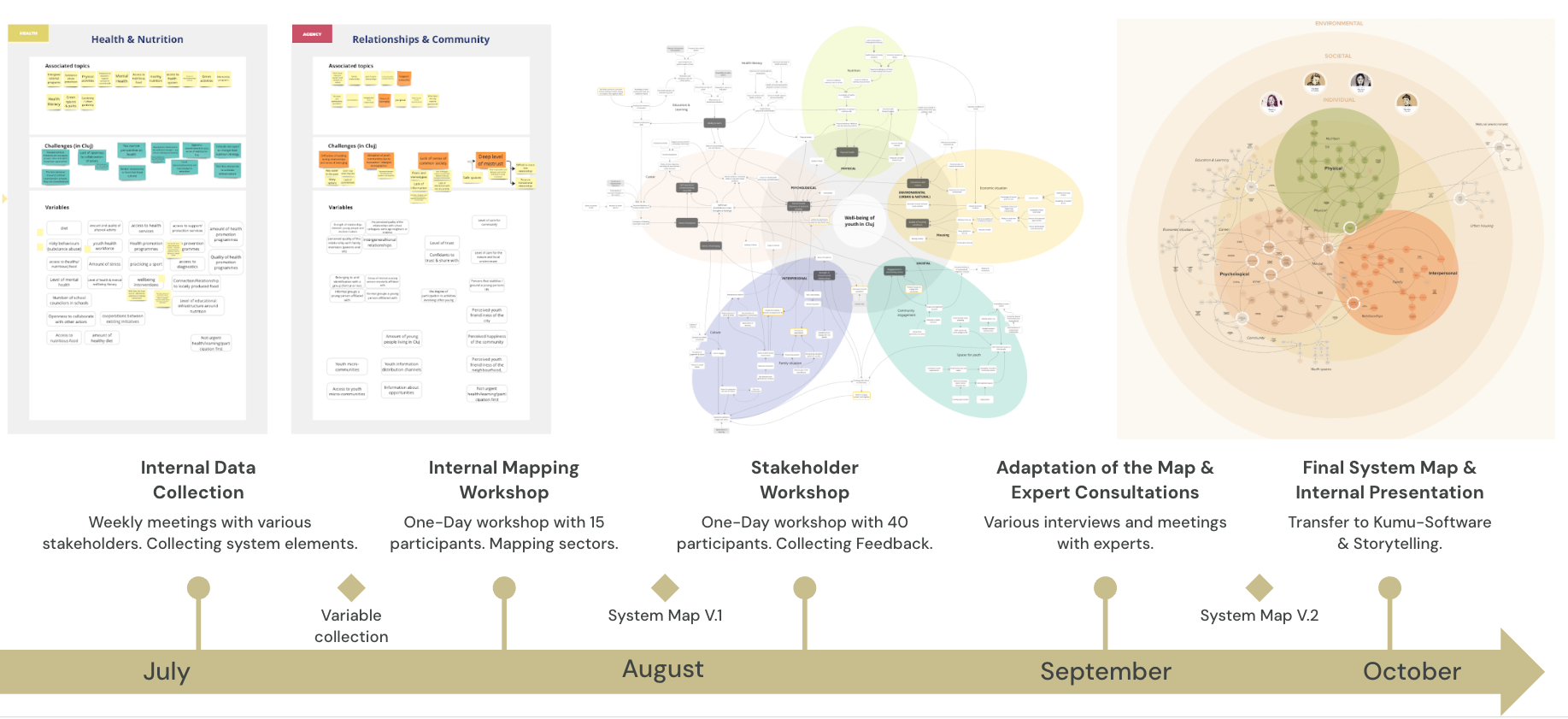
In its essence the resulting map revealed: Wellbeing is relational. Improving wellbeing isn’t only about optimizing isolated factors (like “better school infrastructure”). It’s about improving relationships between factors — such as support for teachers, parents’ attitudes toward schools, and learning opportunities outside school. Those connections — often expressed through feedback loops — are where the system really moves.
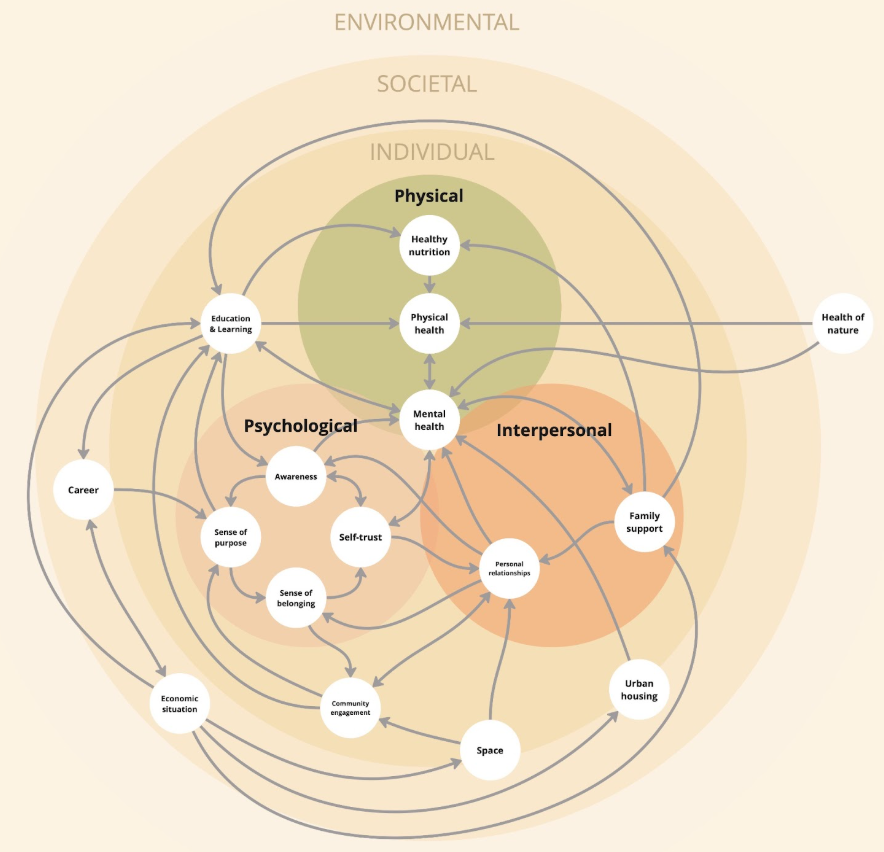
Because the map is detailed, we created a high-level overview map showing which sectors are included and how they interrelate. Still, even with an overview, it can be challenging to grasp the key dynamics when seeing the full System Map for the first time.
Why we created System Personas
One goal of the System Mapping process was to communicate the insights and raise broad awareness for the wellbeing and health of young people in Cluj — and the systemic dependencies they find themselves in.
That’s why we developed four System Personas. Each persona represents a key actor group in Cluj and presents their challenges and resources through a system’s lens. A group of local artists created an illustration for each persona, giving them an even more human profile. We used these personas in multiple stakeholder presentations, and integrated them into the final map published on Kumu.
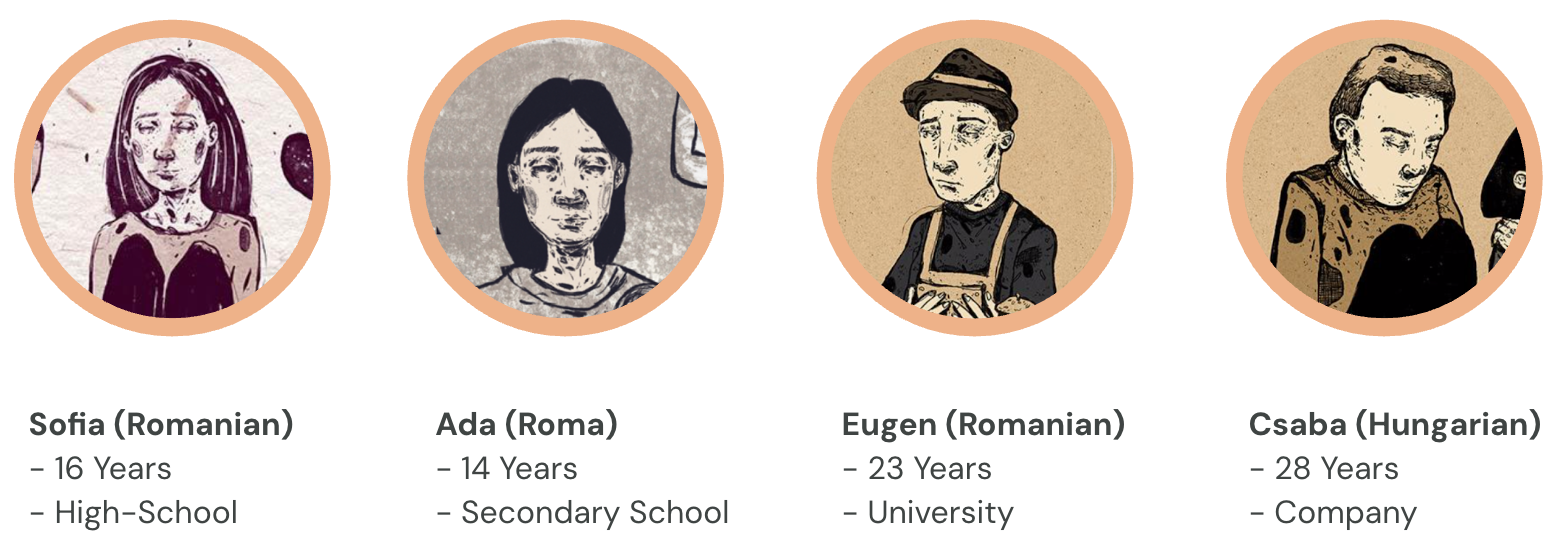
So how does this help in practice? Let’s look at Sofia.
Sofia: telling the system story through a persona
Sofia represents a common group of young people in Cluj: teenagers in public high schools with stable family relations, facing typical struggles in school and society.
Instead of asking someone to interpret the entire System Map, we start with Sofia — and use the map to reveal the dynamics shaping her everyday experience.
In the literature, wellbeing is defined as the balance between a person’s psychological, social, and physical resources and the challenges they face. With this in mind, we focused Sofia’s persona on the system dynamics connected to her challenges — and the resources she has at her disposal.
Below, you’ll find the simplified “persona map” we created for Sofia, alongside the key challenges and resources it highlights. If you’re not familiar with the notation used in the map, you can find a short explanation in our article: “System Thinking — What is it all about”.
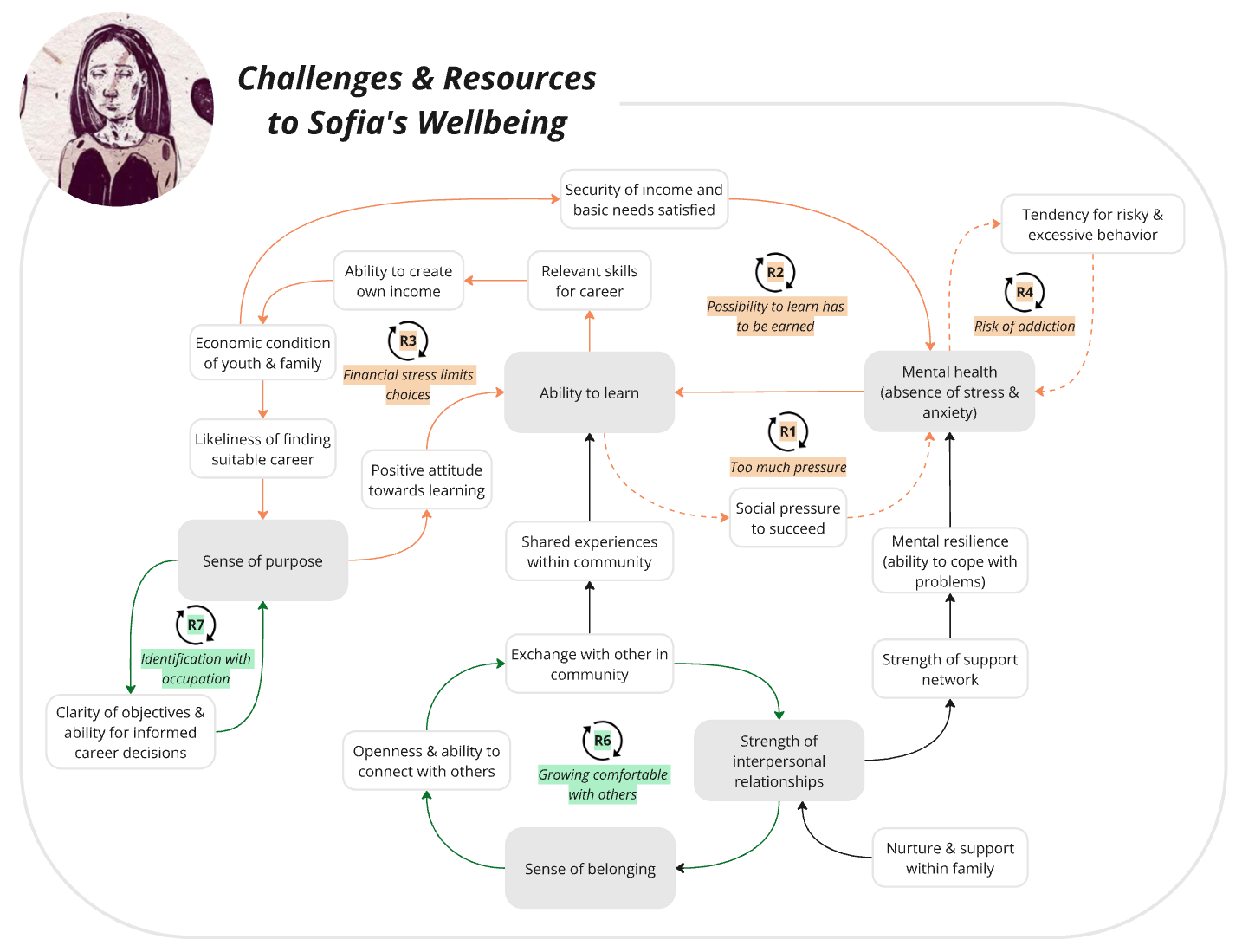
Sofia’s key challenges
These are key challenges which can set off vicious cycles that trap Sofia. In the System Map, these dynamics appear as feedback loops that can intensify over time if nothing interrupts them.
Pressure in the education system
Sofia feels strong pressure to achieve good grades. This can trigger anxiety and reduce her ability to learn effectively. Poor results can increase the pressure further — creating a vicious cycle (loop R1).Financial stress and limited opportunities
Financial stress in her family makes it uncertain whether she can afford further studies to become a teacher (R2). Low salaries in the education sector can also discourage that path, even if she’s motivated (R3).Substance exposure in her social environment
Smoking and drugs at school and in her peer group are present and attractive at times — raising the risk that experimentation could become a harmful habit (R4).
Sofia’s resources
These resources can set off virtuous loops to help Sofia strengthen her resilience and navigate her challenges. These also appear as feedback loops within the System Map.
Supportive relationships
Sofia has strong family ties and trusted friendships. When she feels pressured or overwhelmed, she has people to talk to — reducing stress and increasing her ability to cope.A youth centre and peer community
She is active in a local youth centre and part of a peer-mentoring group. This supports belonging, trust, and confidence — and gives her places to explore questions openly (R6).A strong sense of purpose
Sofia has a high awareness of her strengths and passion, supported by her close ties with family and friends. This helps her see her purpose more clearly and gives her stronger motivation to learn (R7).
Why this works: personas as “mini-maps”
The System Map excerpt for Sofia is a small, more digestible slice of the whole map. It allows us to show both the vicious loops that might endanger her wellbeing and the virtuous loops that strengthen her capacity to overcome challenges — without asking viewers to process everything at once.
System Personas don’t replace the System Map. They help people enter it.
Tips for using System Personas in your System Maps
You don’t need to cover everyone. Personas don’t need to represent every actor in the system. Choose a few that highlight the most important — or most misunderstood — dynamics.
Create a simplified “persona map.” Build a reduced version of the System Map that only shows the variables and loops relevant to that persona. Think: the smallest map that still tells the systemic story.
Don’t try to show everything. A communication map is not the same as an analysis map. Your goal is understanding — not completeness.
Plan time for storytelling. Personas take effort: research, synthesis, narrative, and visuals. But they pay back by making your map shareable — especially with stakeholders who don’t “speak systems” yet.
If you’ve ever created a System Map and struggled to communicate it, System Personas can be a simple next step. They help people enter complexity without getting lost in it.
Special thanks to SDG Colab, and especially to Barbara Bulc, the initiator of the OurCluj Initiative. Without her passion, commitment, and years of dedicated work in Cluj, this project would not have been possible.
We also thank Fondation Botnar for funding the project and for its continued engagement in improving the health and wellbeing of young people in urban environments around the world.